
Tavily Search MCP Server
AI-native search engine MCP server designed for autonomous agents, research aggregation, and grounded citations.
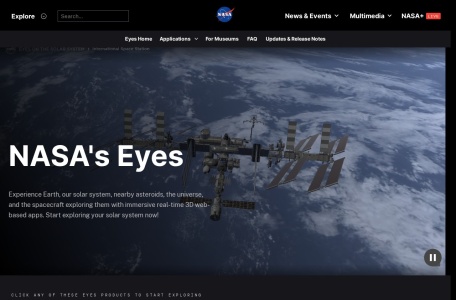
Photorealistic 3D interactive simulator exploring the Solar System, Mars rovers, asteroids, exoplanets, and NASA spacecraft missions.
NASA’s Eyes on the Solar System is a 3D visualization and real-time space simulation web application developed by NASA’s Jet Propulsion Laboratory (JPL). Powered by real trajectory data from spacecraft, it lets users fly along with robotic explorers, observe asteroid close encounters, and view planetary orbits across accurate cosmic timelines.
No. The modern version runs directly in any WebGL-compatible web browser on desktop, tablet, and mobile devices without plugins.
Extremely accurate. JPL engineers feed official navigational ephemeris and telemetry data directly into the simulation models.
Yes. You can jump to past milestone missions (like the Apollo 11 moon landing or Mars Curiosity landing) or simulate future eclipse alignments.